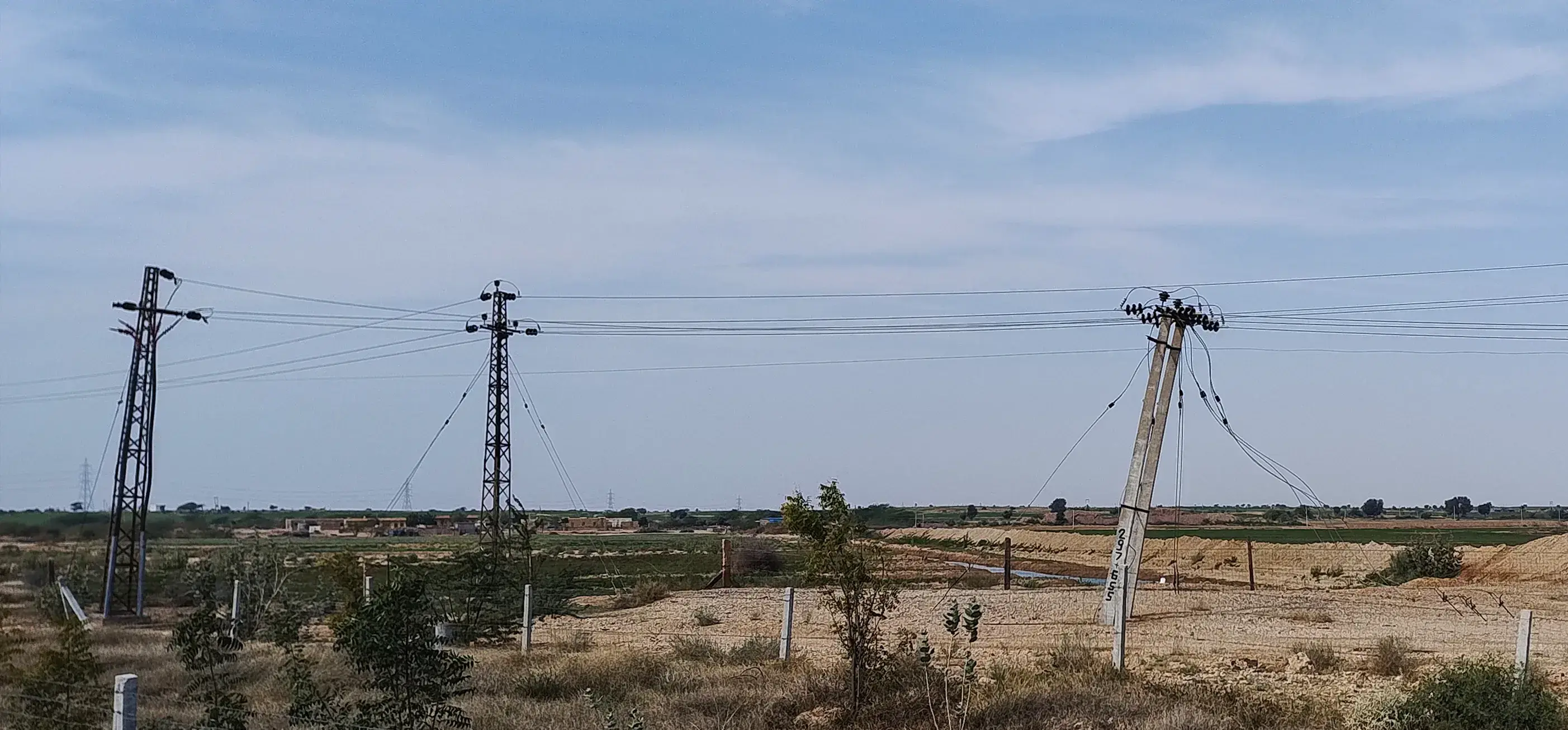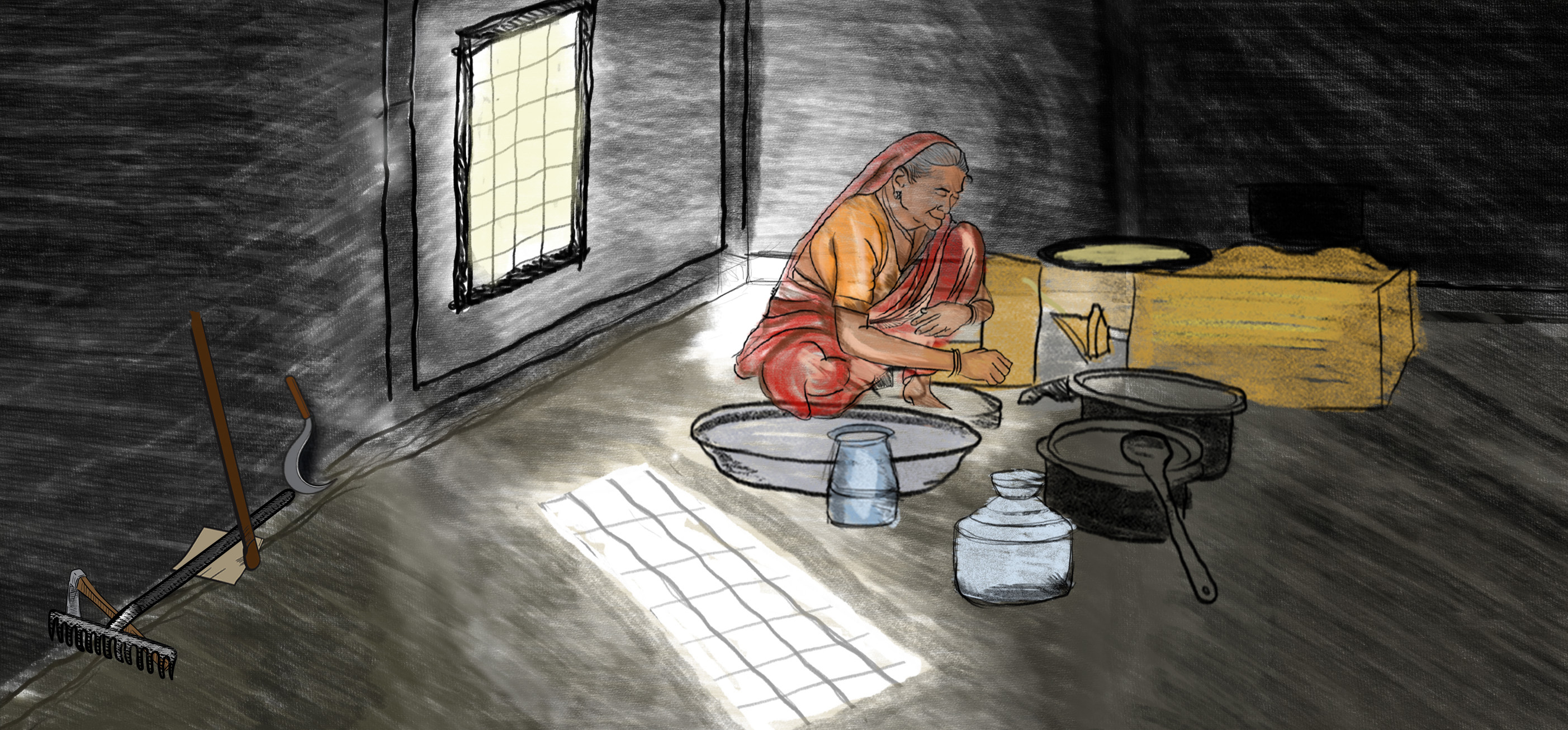

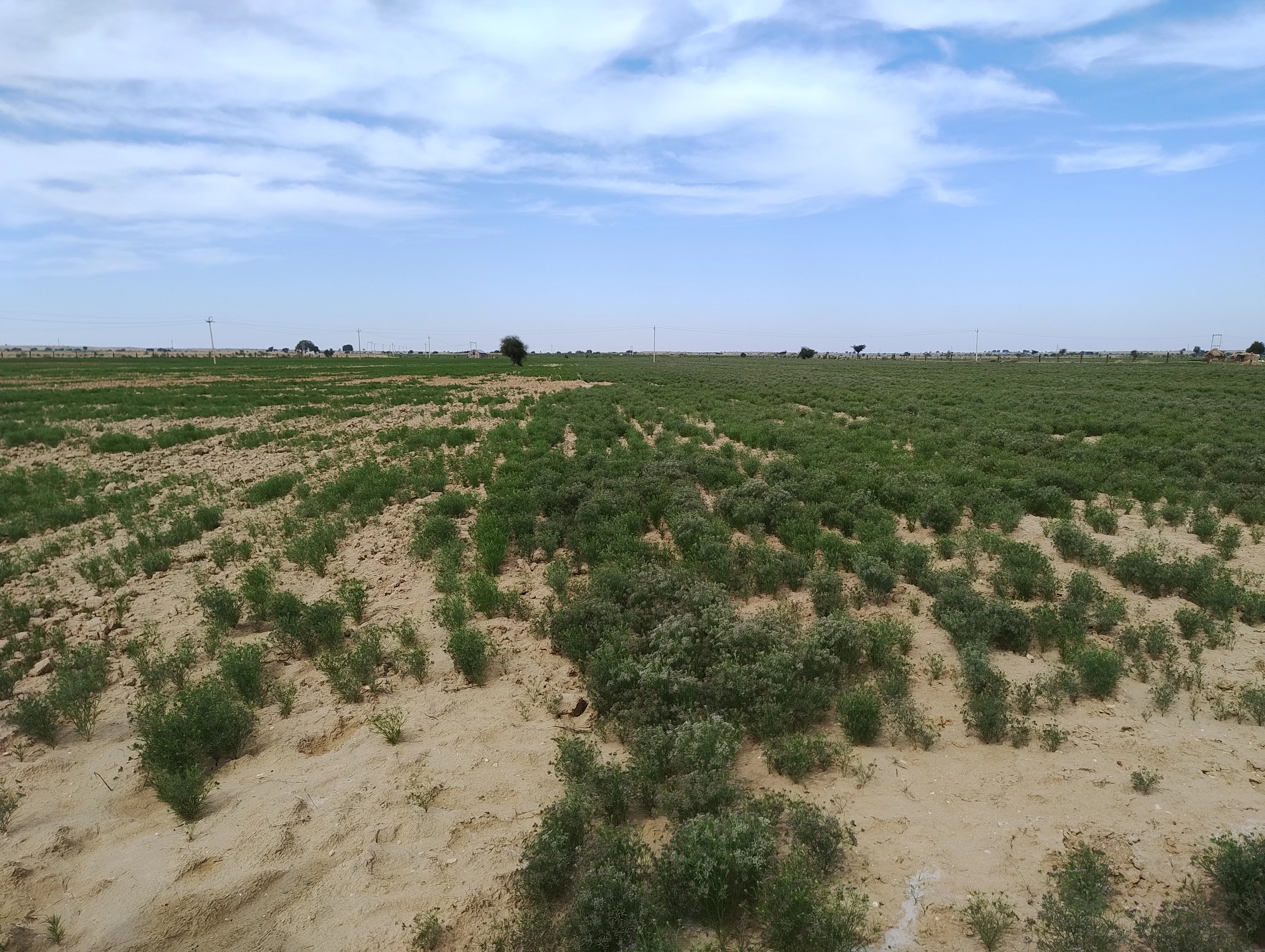
In Sanwla village, located just five kilometres from the Chandan grid substation, the scheduled supply hours of electricity to agricultural consumers are six hours a day. However, in practice, farmers report receiving only three to four hours. Voltage levels frequently fluctuate outside the standard supply range. As a result, transformers burn out, motors are damaged, and irrigation halts. Repairing agricultural pumps imposes a substantial cost on farmers, which is borne by the farmers themselves.
In July 2023, hundreds of farmers from across the Chandan subdivision in Jaisalmer district protested the state of agricultural electricity supply. Their grievances pointed to long-standing issues of infrastructure overload, resource constraints, poor planning, and blurred responsibility between utility and user.
In early 2024, the Centre for Energy, Environment & People (CEEP) conducted a field study to document conditions in three locations—Sanwla, Delasar, and Sojio Ki Dhani—to understand the systemic causes of this rural electricity crisis.

The Grounded Realities of Supply
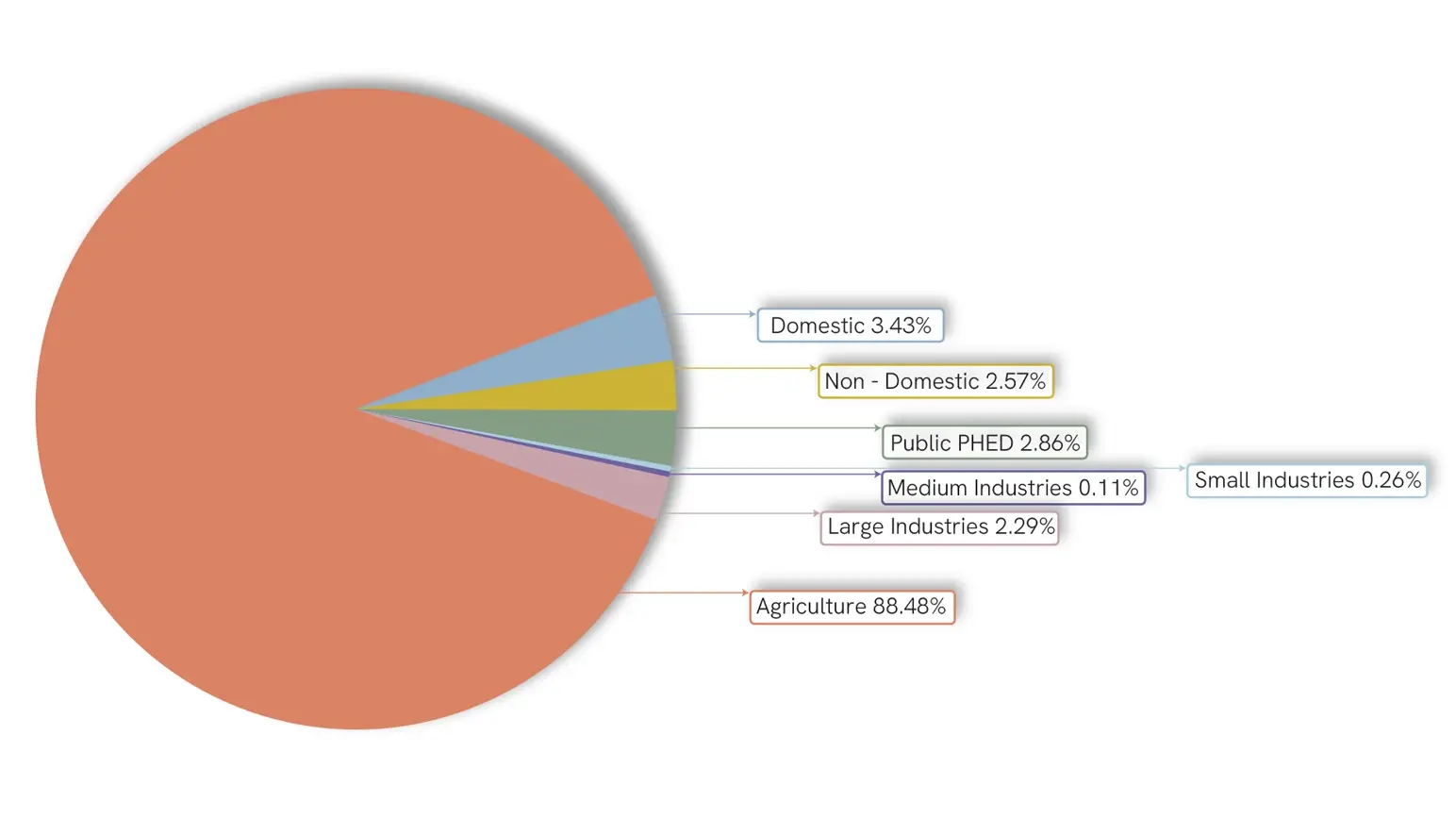
The area under Chandan Subdivision comprises 15 villages and is served by Jodhpur Discom. Nearly 90 percent of its electricity demand comes from agriculture. Farmers grow cumin, peanuts, mustard, and psyllium husk using groundwater extracted from borewells reaching depths of around 200 feet. Pump capacities range from 25 to 100 HP, with most connections falling between 30 and 40 HP.
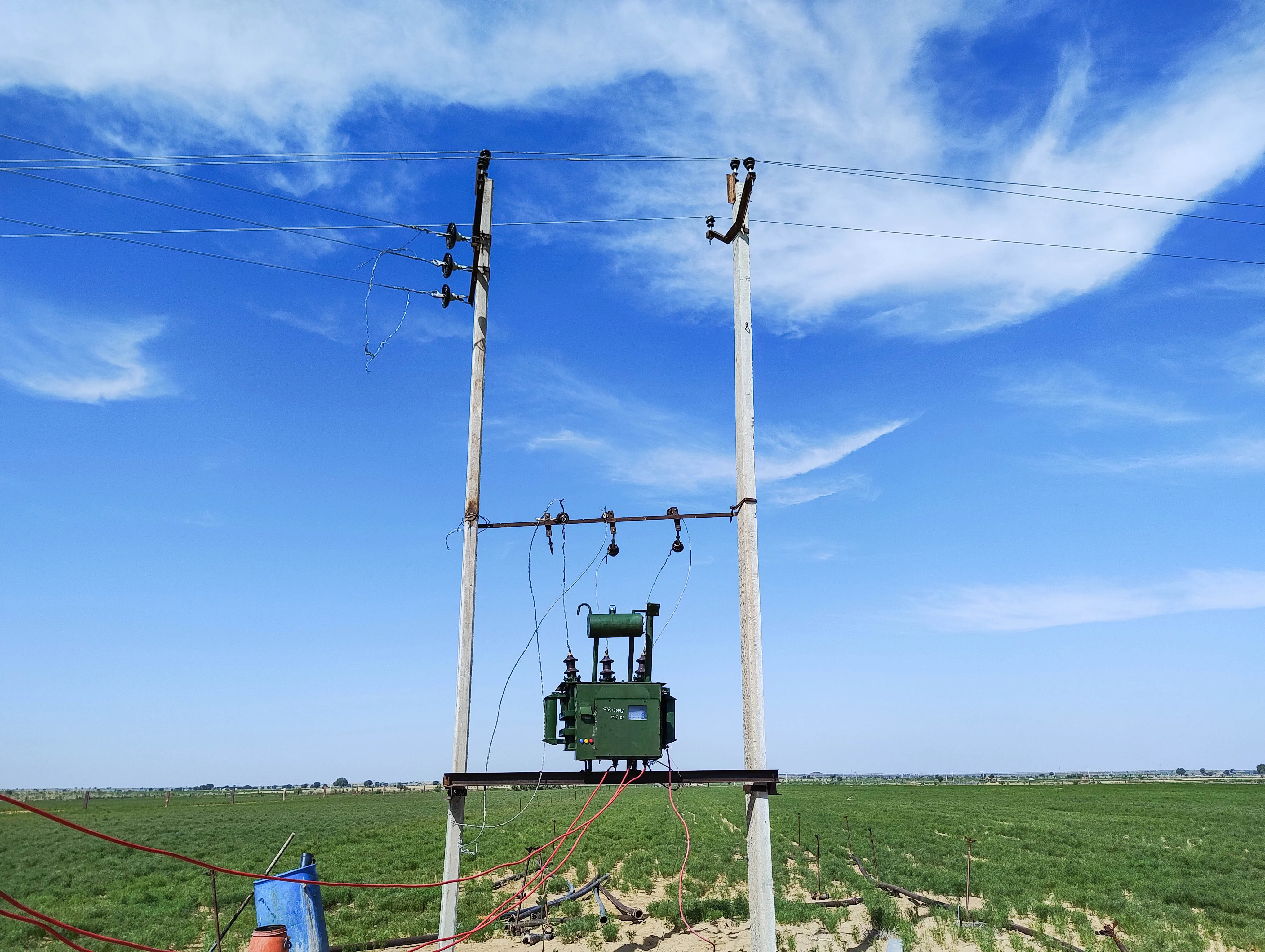
In Sanwla, a significant number of agricultural connections operate under flat-rate tariffs. Even though electricity is supplied for a block period of 6 hours per day for agriculture connections in Rajasthan, it is available for barely 3.0-4.0 hours. As per the local farmers, they have to pay the full monthly fixed amount based on the block period. The erratic power supply, coupled with voltage fluctuations, leads to damage to transformers and pumps. One farmer reported paying ₹40,000 three times in a single month to replace failed transformers, with no official receipts issued. Crop losses resulting from these failures are common.
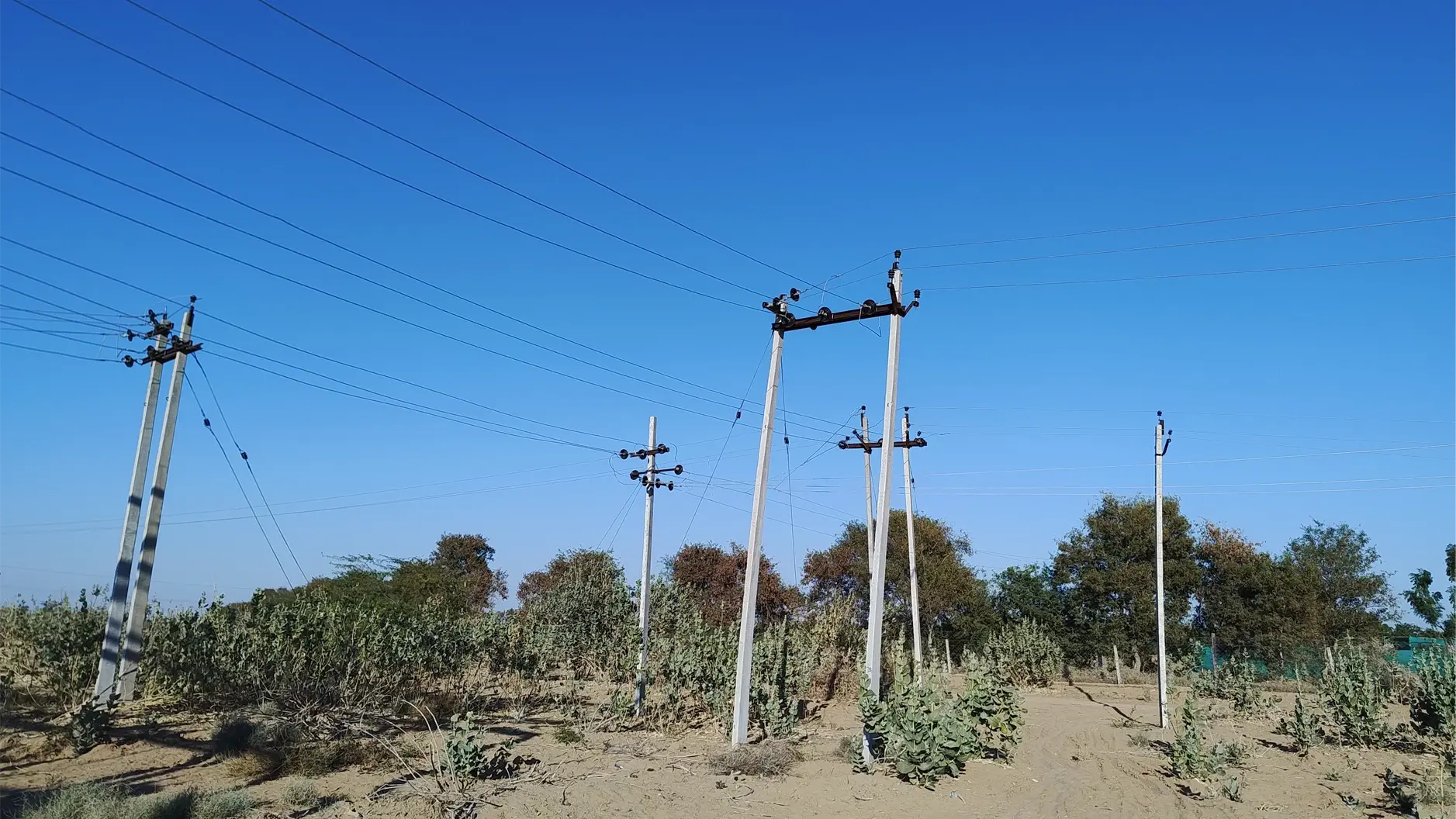
To manage the electricity supply, farmers have divided the agricultural feeder into two sub-feeders themselves. They use social media and WhatsApp groups to disseminate information, manage time slots for electricity supply and raise any issue of unscheduled outages. While this workaround seems to help farmers, it carries huge safety risks to people and the distribution infrastructure, highlighting a failure in the region’s distribution services.
Infrastructure Overload and Staffing Shortfalls
Delasar grid substation (GSS) serves more than 500 agricultural connections— the highest in the Chandan subdivision. Of its ten 11 kV feeders, nine are dedicated to agriculture. Supply voltage often remains low, and the load is unevenly distributed across feeders. Some feeders carry up to three times the load of others. The substation is operated by only two employees, one permanent and one contractual, responsible for all operations and maintenance.

Pending Connections and Unofficial Usage
Chandan has approximately 5,000 agricultural connections. As of February 2024, 1,100 new applications were pending. Of these, local estimates suggest that 700 to 800 applicants are already drawing electricity through unregistered connections. These are not reflected in official records but contribute to the overall system load. This situation underscores the need to address power supply limitations and improve accountability within the distribution system.
Maintenance Burdens Shifted to Farmers
Farmers across the subdivision reported being asked to assist with repairs and bear associated expenses. Transformers that were seized by the utility remained piled at the subdivision office. Maintenance staff are few and overburdened. At some substations, two GSS workers—one regular and one contractual—are responsible for managing more than one GSS at the same time. Workers often perform duties without safety gear or wooden ladders at the substations surveyed. Villagers in Sanwla reported frequent electrical accidents, with no official updates, investigations, or communication from the utility.

Recommendations for Systemic Reform
Based on field findings, CEEP outlines several recommendations to address the complex challenges affecting agricultural electricity supply in the Chandan Subdivision of Jaisalmer.
A key thrust of the recommendations is to leverage the area's potential for decentralised solar energy, taking advantage of its land availability, shallow groundwater levels, and high solar insolation. This approach is seen as mutually beneficial — potentially lowering utilities' power purchase costs, reducing the financial burden of agricultural subsidies, improving supply reliability for farmers, and contributing to environmental sustainability.
The main recommendations are:
Feeder-level solarisation at the substation level to reduce reliance on conventional grid power. This would help relieve pressure on utility infrastructure and ease grid capacity constraints.
Tail-end integration of solar energy through the use of solar pumps and ground-mounted systems. The report identifies this as a technically feasible and contextually appropriate solution for the region.
Promoting the use of energy-efficient pumps, capacitors, and cables to improve system efficiency and reduce transmission and distribution losses.
Feeder segregation alongside a shift to a 24-hour block supply, aimed at reducing infrastructure load, technical losses, and peak electricity demand.
Introducing smart metering for agricultural supply to improve monitoring, fault detection, and issue resolution.
Publishing key operational data, such as 11 kV supply voltage, peak feeder loads, and overload periods, to enhance transparency and responsiveness in system management.
Establishing monitoring structures, including sub-committees at the GSS level and monitoring committees at the circle and state levels, to improve accountability and oversight.
Creating regular platforms for farmer engagement on electricity usage, load management, and reporting of faults or misuse.
Adopting interim Standards of Performance (SoP) and Terms and Conditions of Supply (TCoS) specific to agricultural connections until formal directives are issued by the state government or regulatory commission.
Together, these measures aim to improve the reliability, efficiency, safety, and transparency of electricity supply to agricultural consumers in the region.
The Need for a New Approach
Field conditions in Chandan highlight critical deficiencies in distribution networks and services. Across Sanwla, Delasar, and Sojio Ki Dhani, the system depends on the people it is meant to serve. These users are not just consuming power. They are repairing, coordinating, and absorbing the consequences of unreliable service.
CEEP’s findings point to a system stretched thin and in need of urgent, structural reform. Any solution must recognise the evidence from the field and prioritise changes that improve reliability, accountability, and delivery.
The article is edited by Anshuman Gothwal, Co-founder and Director-Programs at CEEP.
Please ensure all required fields (*) are filled out accurately.