

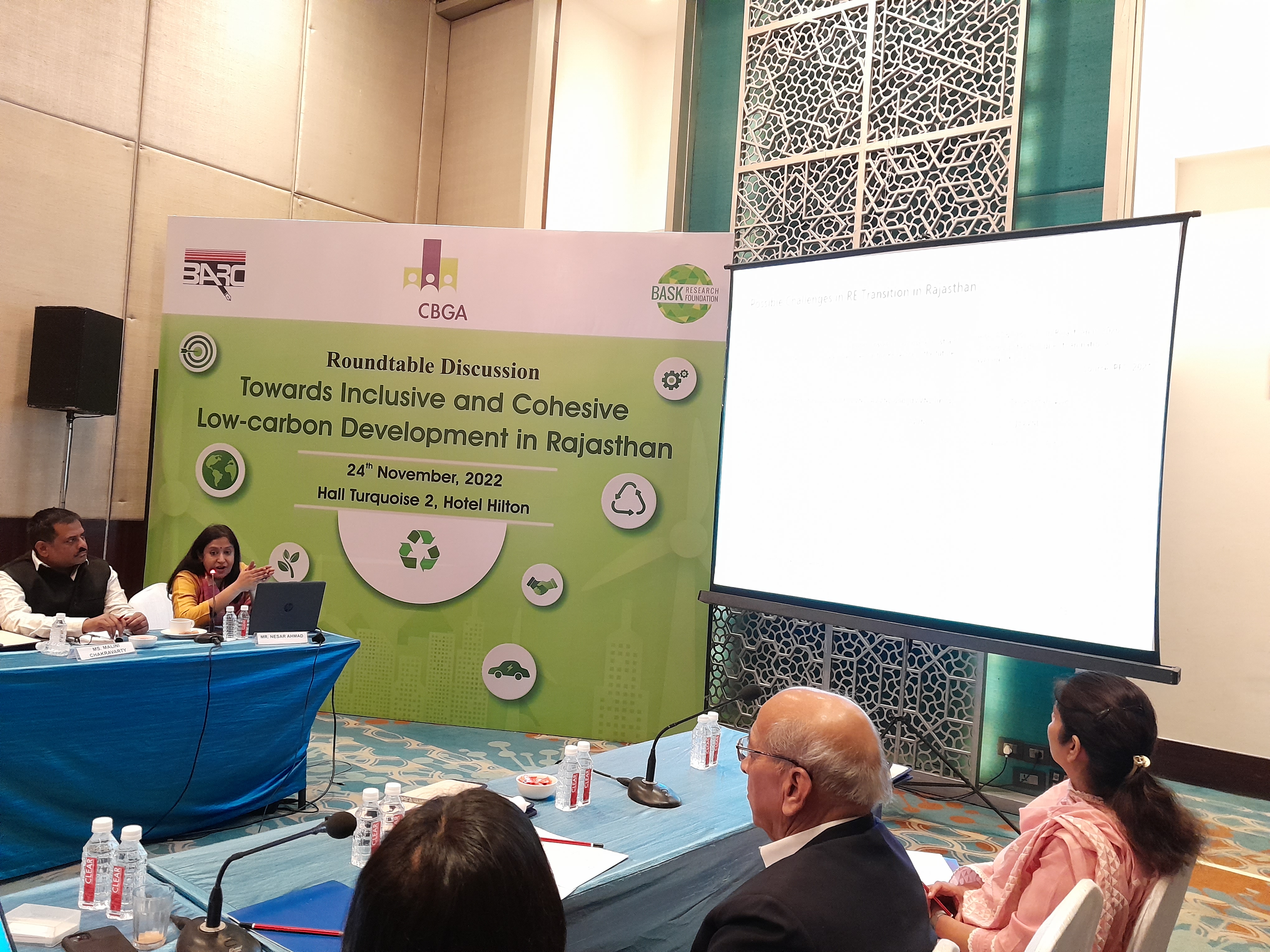
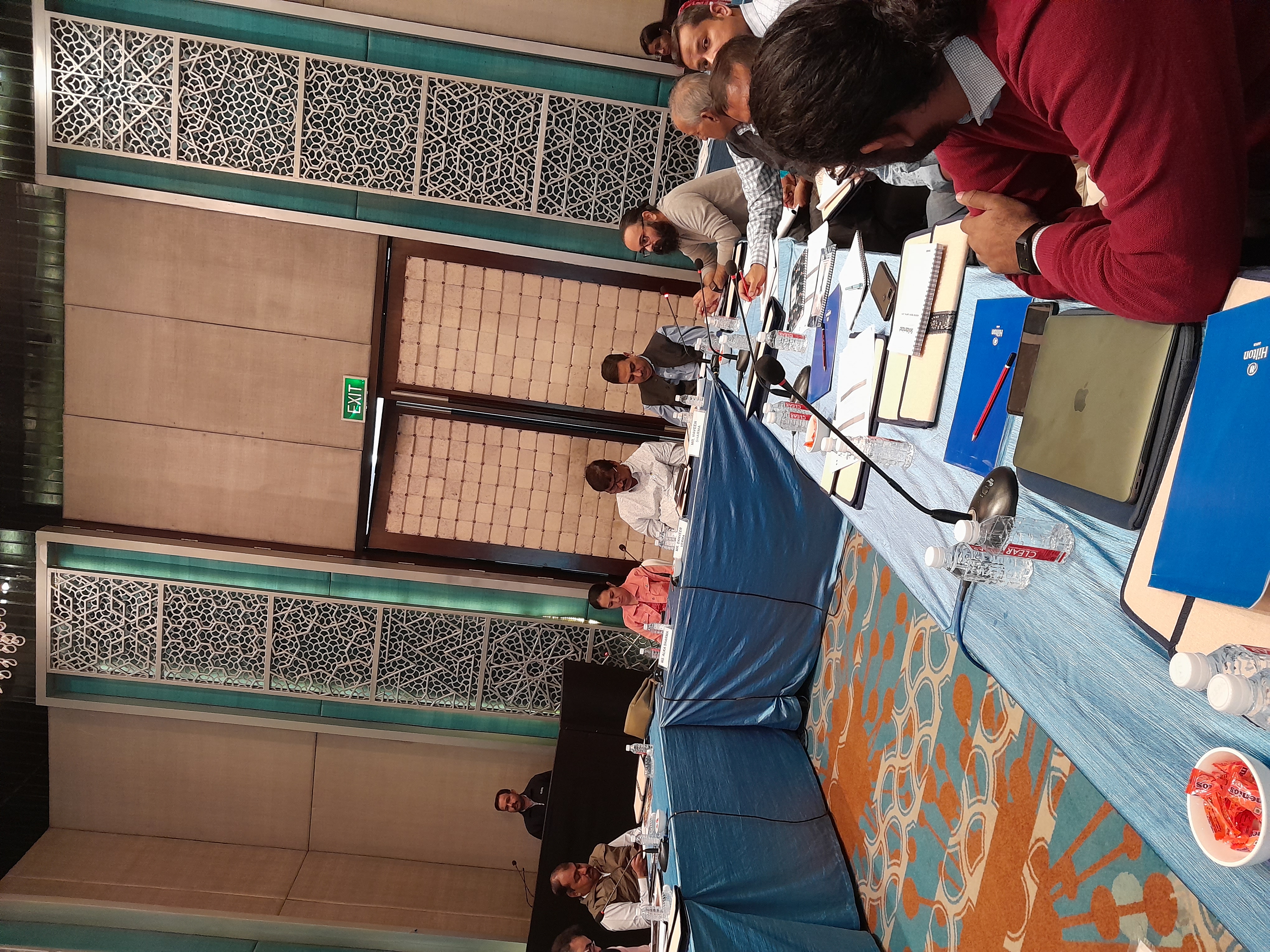
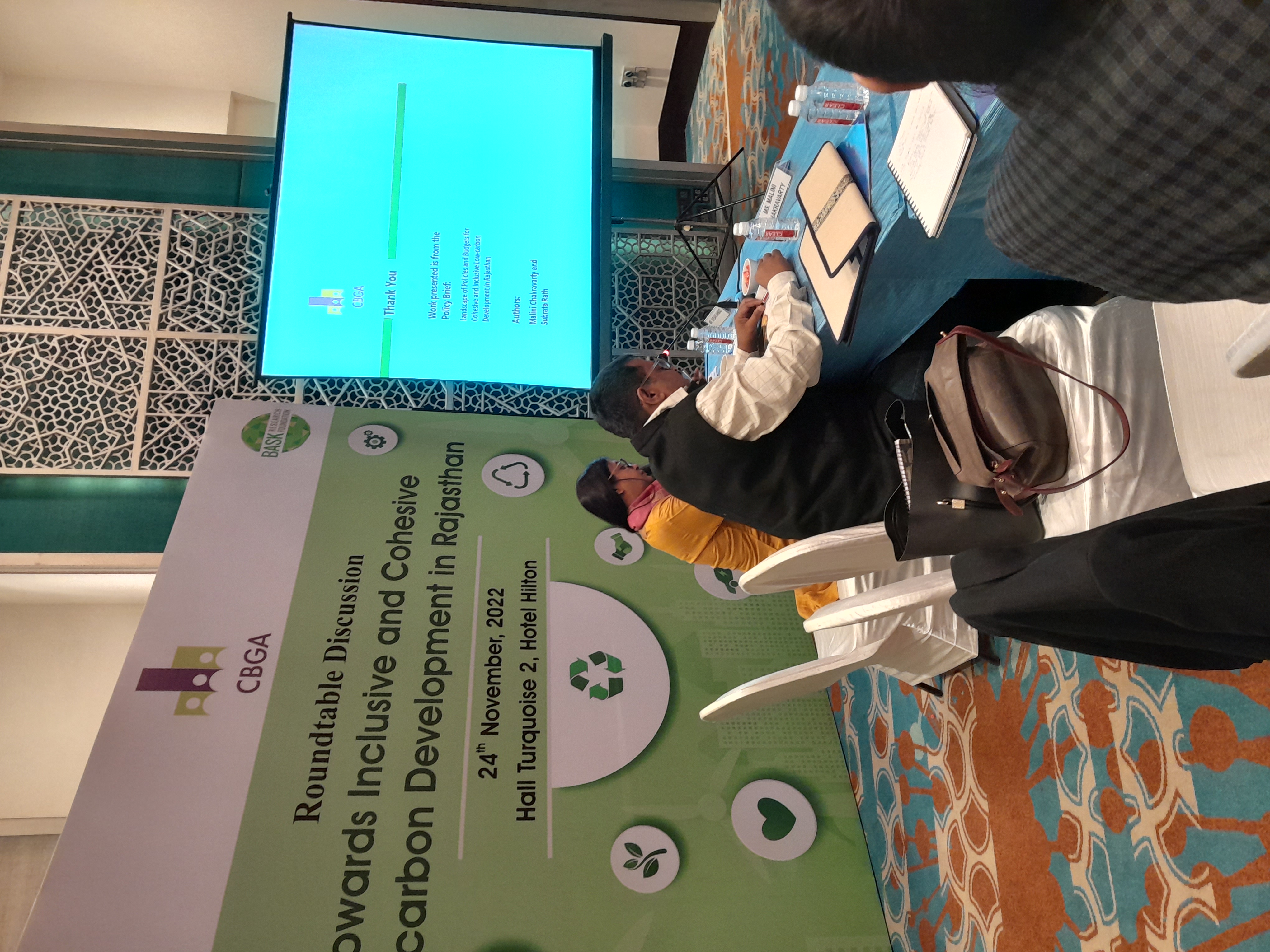
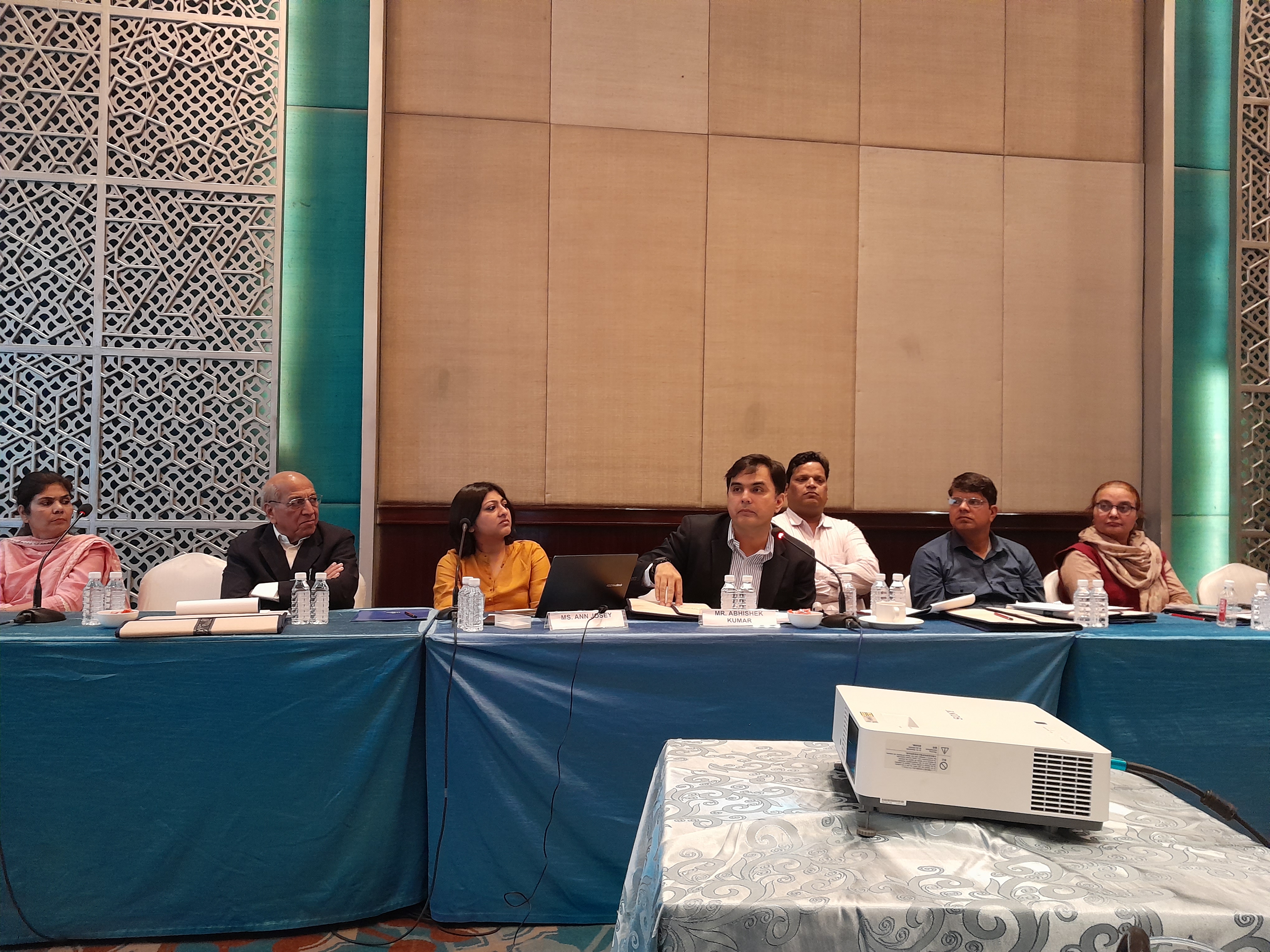
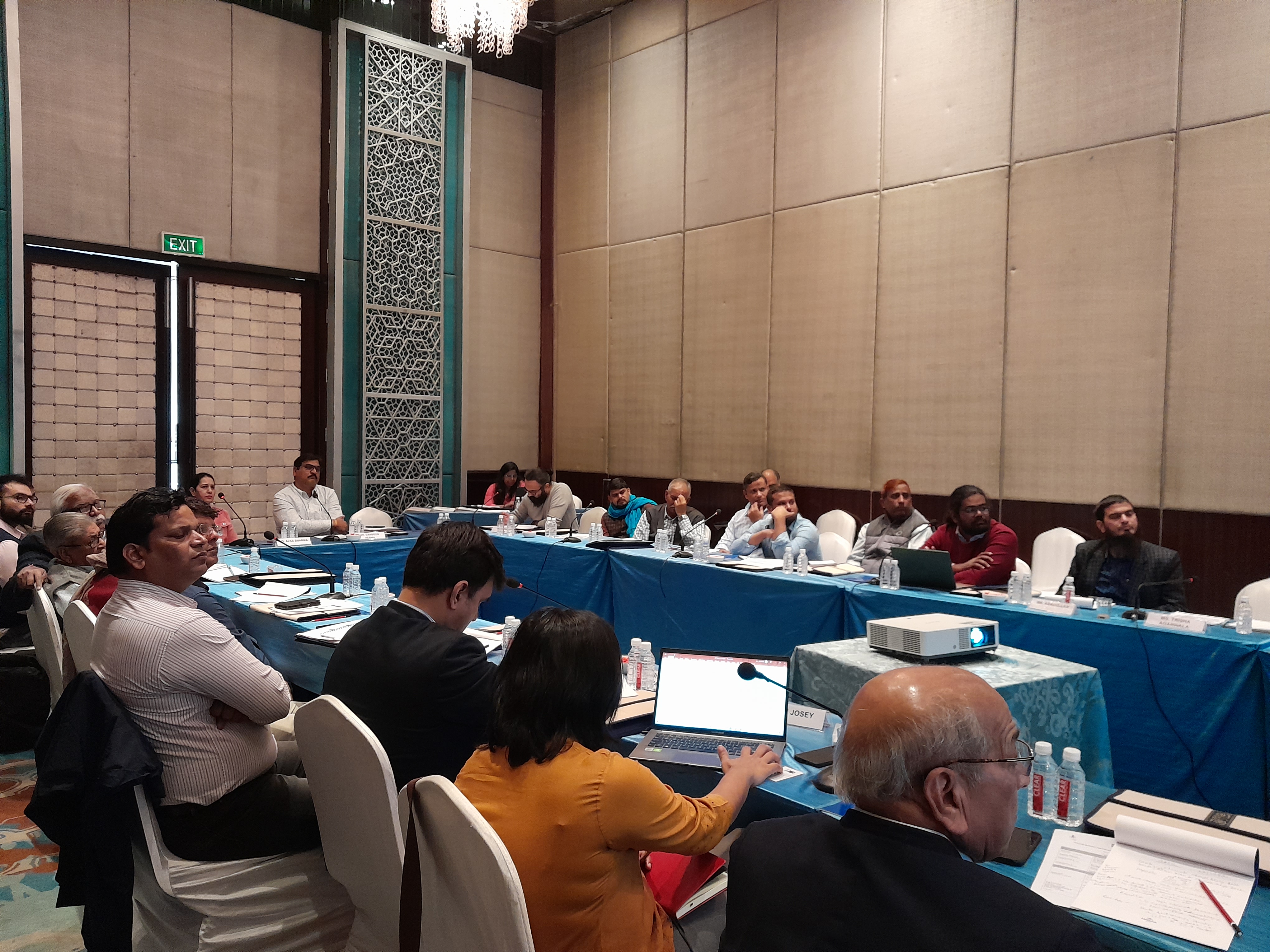
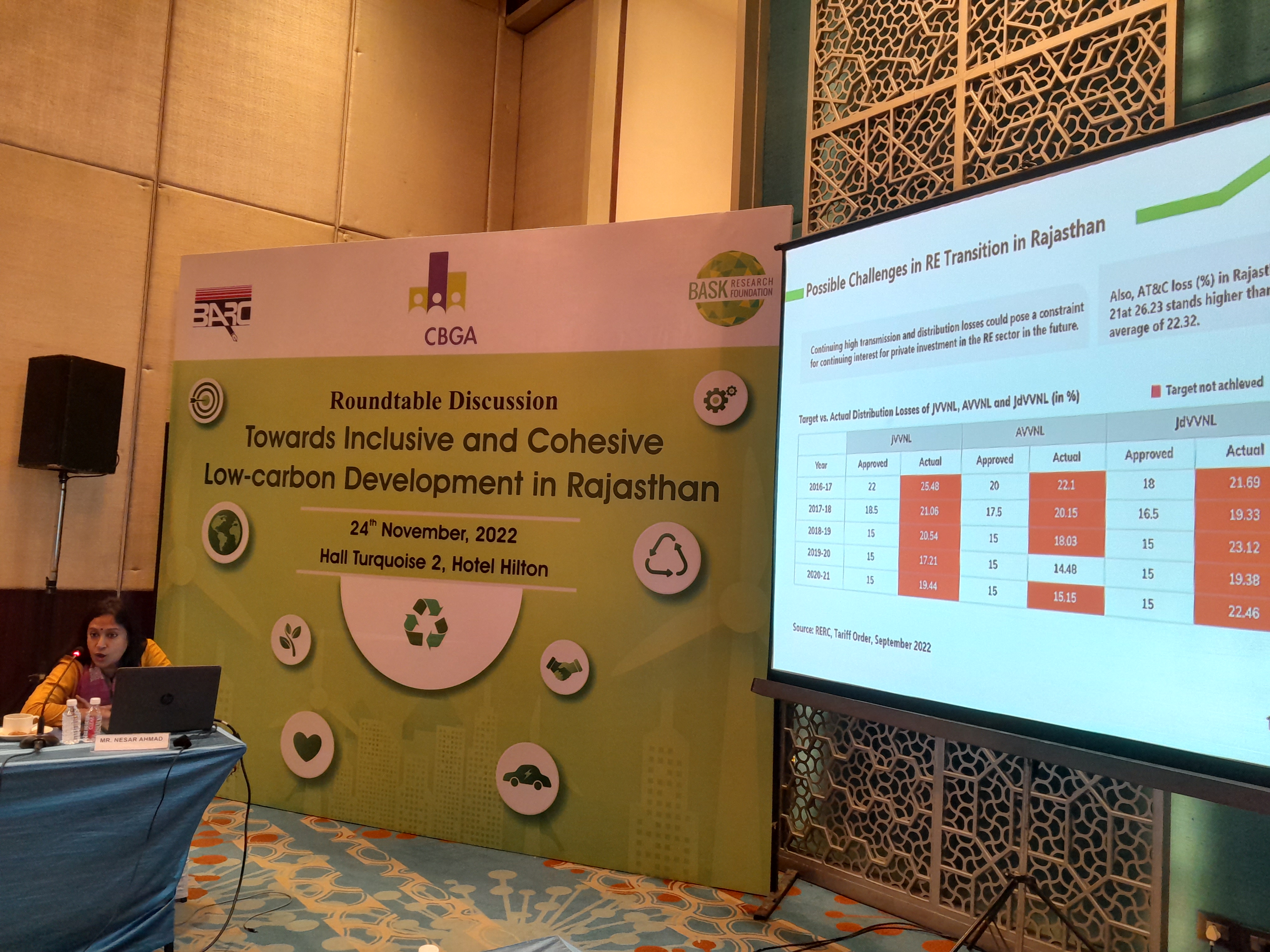
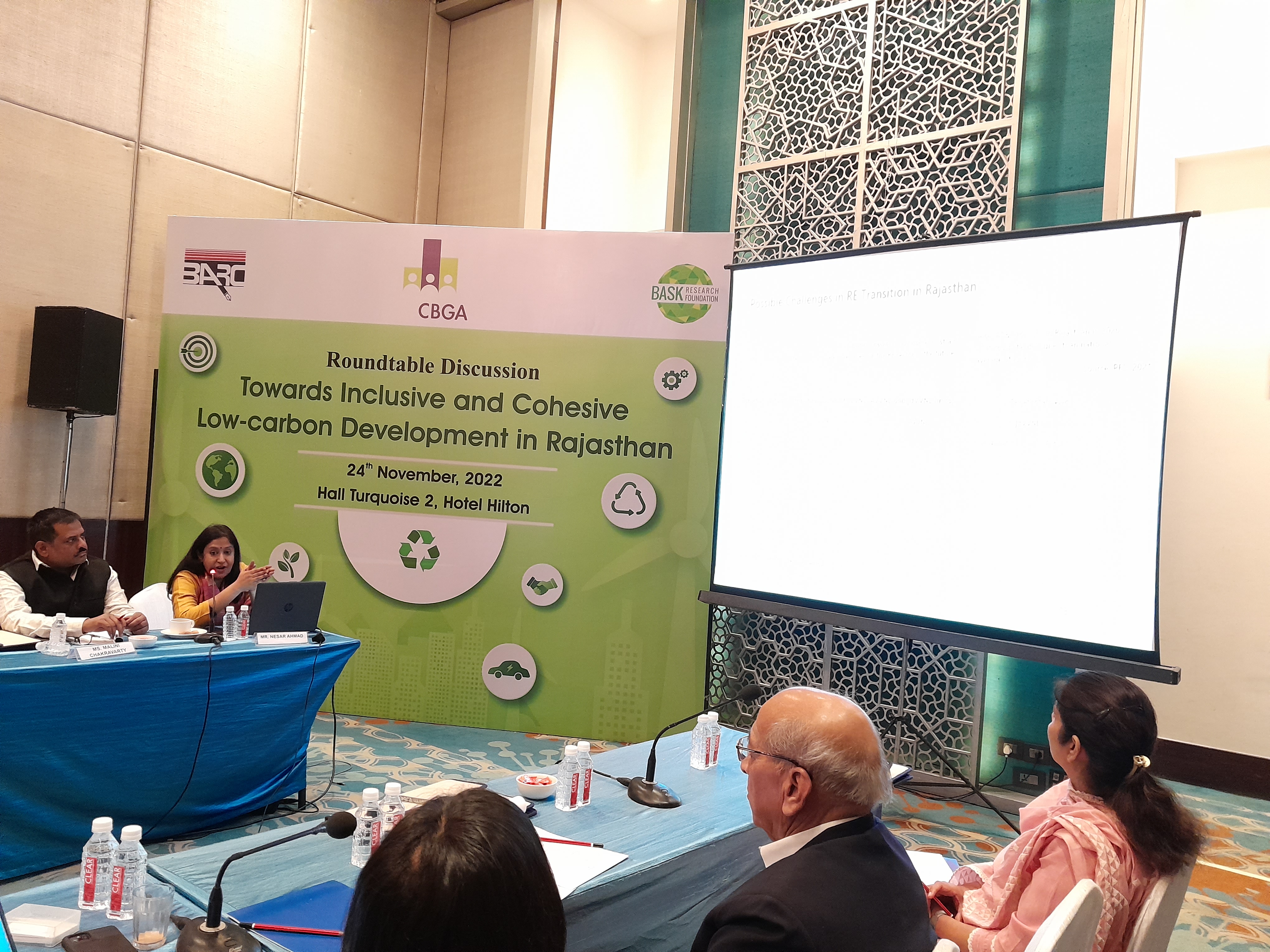
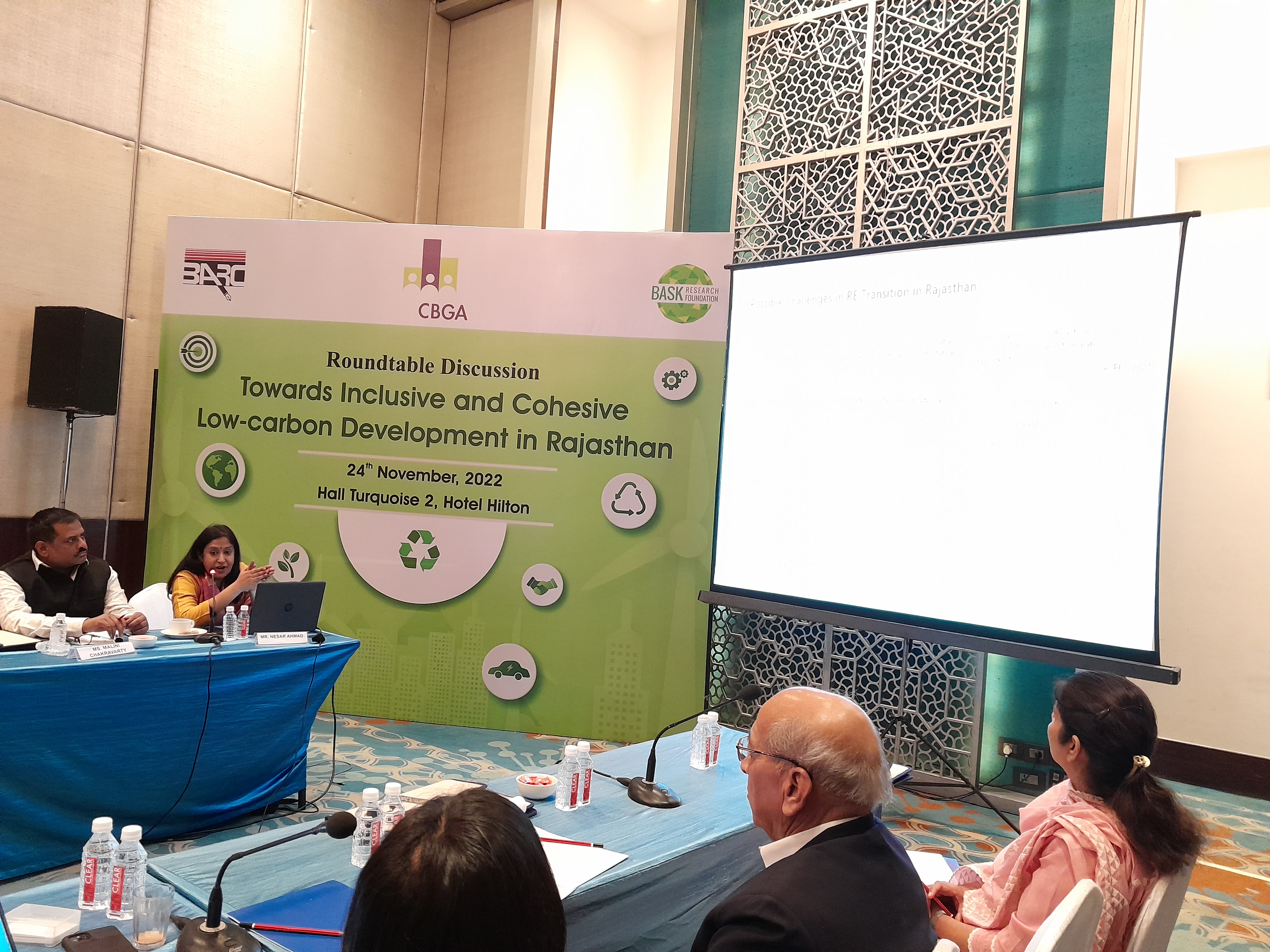
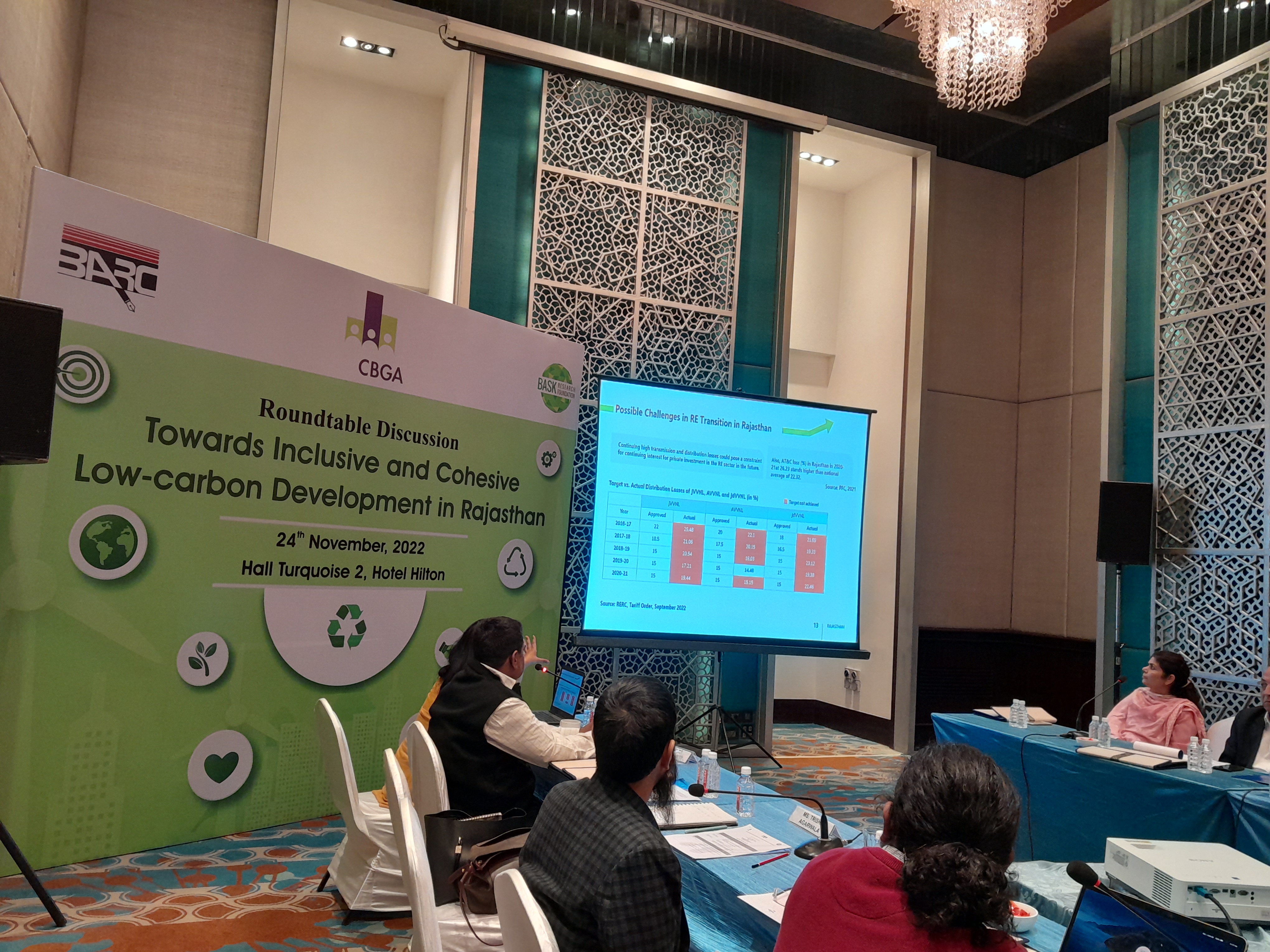
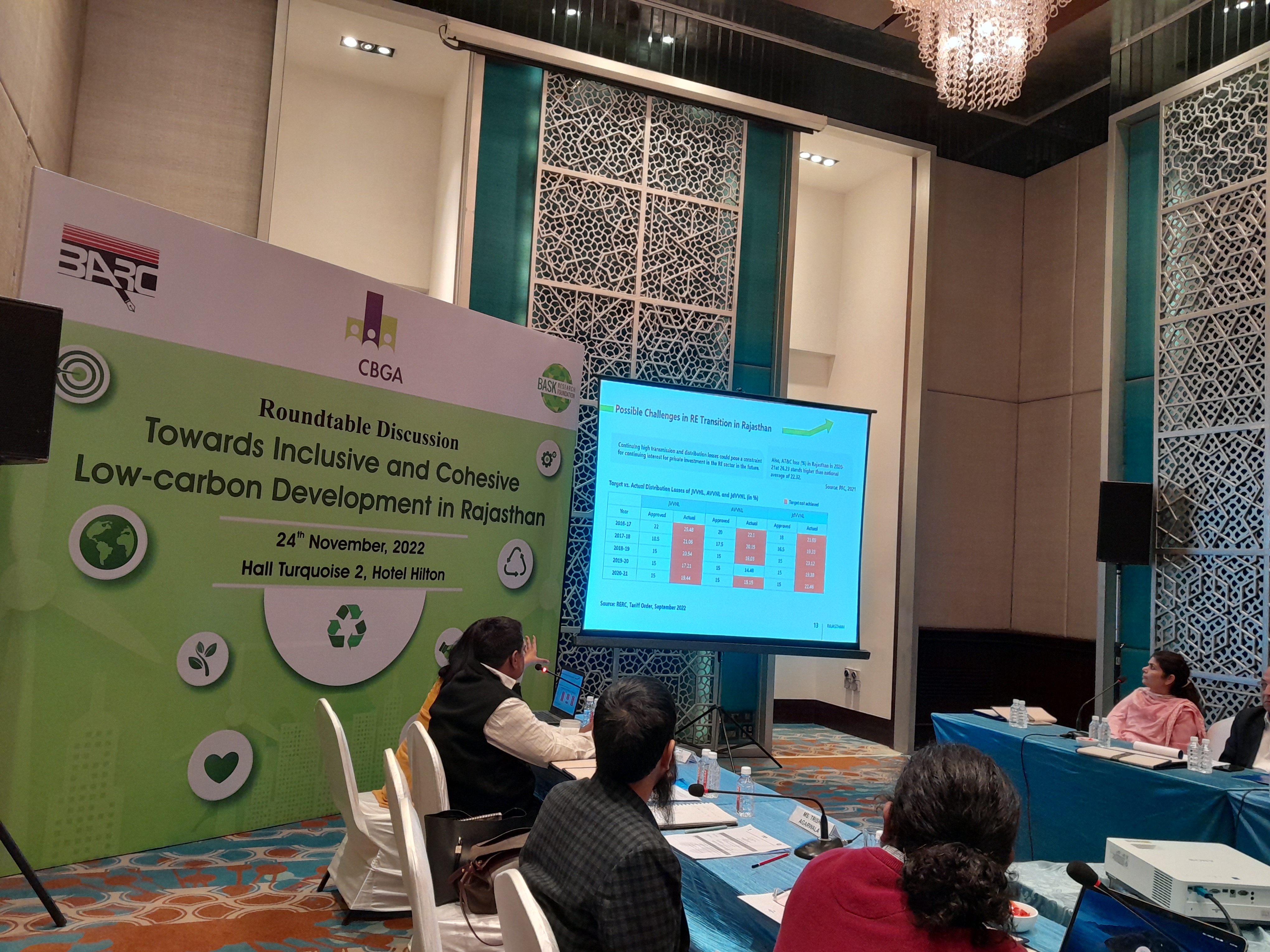
A roundtable was organised by CBGA, BARC, and CEEP to discuss the potential of climate-responsive budgeting for climate change mitigation. Findings from CEEP’s research on public financing for clean energy in Rajasthan were shared, highlighting mapped policies, climate-relevant programmes, and social welfare schemes. The event explored opportunities and challenges in accelerating low-carbon development in Rajasthan’s power sector.
The looming climate crisis facing India, coupled with the COVID-19 pandemic has resulted in increased inequality. This makes the need to adopt low-carbon strategy of development that also offers economic and social co-benefits, imperative. In this context, CBGA’s research study on - “Building an Inclusive and Cohesive Public Climate Financing Framework in the States” is meant to strengthen knowledge and capacity for facilitating inclusive, low-carbon development trajectories of the state economies in India.
This roundtable organized by, Centre for Budget, and Governance Accountability (CBGA), Bhabha Atomic Research Centre (BARC), Centre for Energy, Environment and People ((CEEP) formerly known as Bask Research Foundation) intended to highlight potential climate change mitigation efforts that climate responsive budgeting holds.
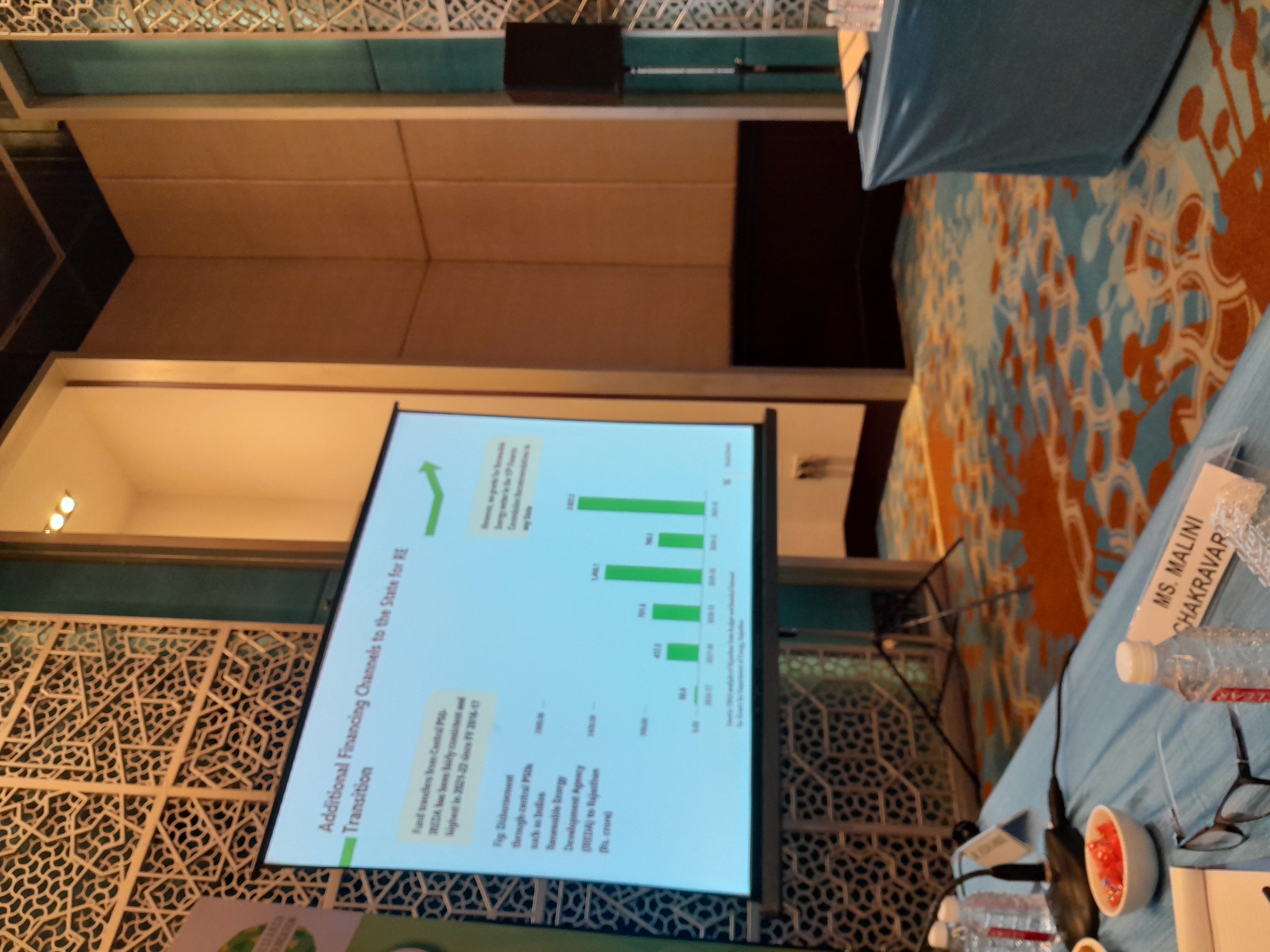
The roundtable disseminated the findings from CEEP’s research on demystifying the existing framework of public financing for climate change mitigation actions of clean energy financing in Rajasthan. In CBGA’s research study, several relevant government policies have been mapped. It identified, climate-relevant programmes and schemes tracking the fiscal outlay by different departments in Rajasthan in the most recent years. It also analyzed the climate responsiveness of some of the existing social welfare schemes related to skilling and their potential for up-skilling the local population for job opportunities in the climate mitigation sector (such as, in clean energy) and suggestions have been made for bringing cohesiveness in policies for accelerating climate finance. The platform was to discuss the opportunities and challenges that Rajasthan faces in low-carbon development in the power sector.
A roundtable was organised by CBGA, BARC, and CEEP to discuss the potential of climate-responsive budgeting for climate change mitigation. Findings from CEEP’s research on public financing for clean energy in Rajasthan were shared, highlighting mapped policies, climate-relevant programmes, and social welfare schemes. The event explored opportunities and challenges in accelerating low-carbon development in Rajasthan’s power sector.
The looming climate crisis facing India, coupled with the COVID-19 pandemic has resulted in increased inequality. This makes the need to adopt low-carbon strategy of development that also offers economic and social co-benefits, imperative. In this context, CBGA’s research study on - “Building an Inclusive and Cohesive Public Climate Financing Framework in the States” is meant to strengthen knowledge and capacity for facilitating inclusive, low-carbon development trajectories of the state economies in India.
This roundtable organized by, Centre for Budget, and Governance Accountability (CBGA), Bhabha Atomic Research Centre (BARC), Centre for Energy, Environment and People ((CEEP) formerly known as Bask Research Foundation) intended to highlight potential climate change mitigation efforts that climate responsive budgeting holds.
The roundtable disseminated the findings from CEEP’s research on demystifying the existing framework of public financing for climate change mitigation actions of clean energy financing in Rajasthan. In CBGA’s research study, several relevant government policies have been mapped. It identified, climate-relevant programmes and schemes tracking the fiscal outlay by different departments in Rajasthan in the most recent years. It also analyzed the climate responsiveness of some of the existing social welfare schemes related to skilling and their potential for up-skilling the local population for job opportunities in the climate mitigation sector (such as, in clean energy) and suggestions have been made for bringing cohesiveness in policies for accelerating climate finance. The platform was to discuss the opportunities and challenges that Rajasthan faces in low-carbon development in the power sector.
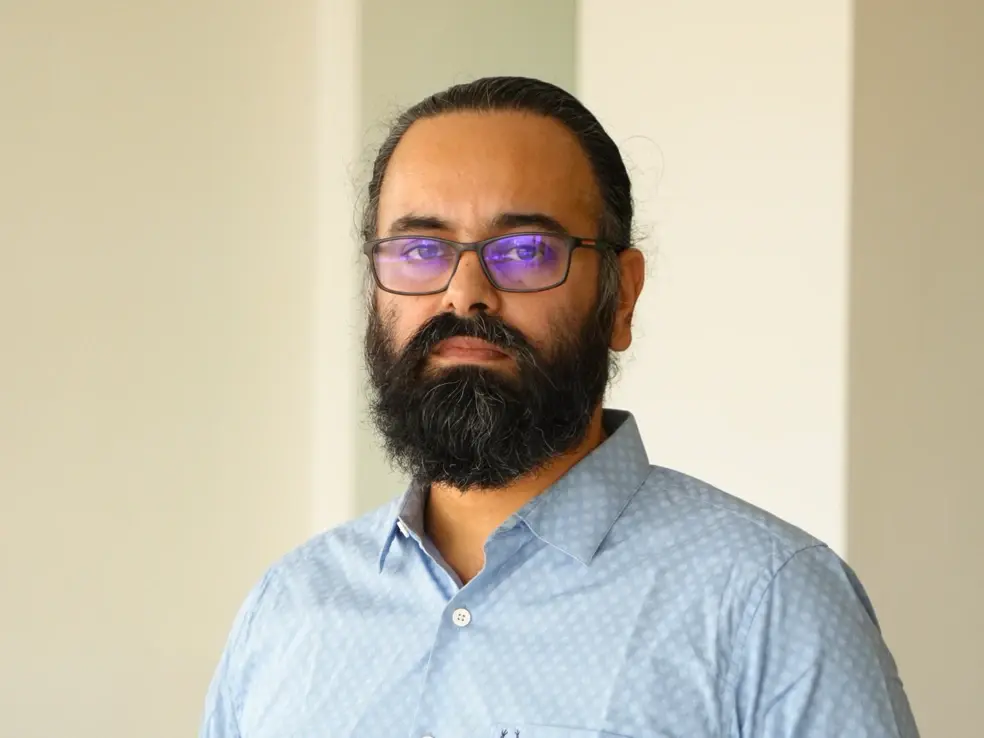
Simran Grover is the founder and CEO of the Centre for Energy, Environment, and People (CEEP), an initiative for energy equity and climate justice. The initiative is amongst the very few sub-national focused organisations in the country - enabling inclusion of diverse and marginal voices and meaningful action. He has substantive experience in the domains of renewable energy, power sector, applied research, and entrepreneurship. Currently, he leads critical work in just energy transition and power sector reforms, with emphasis on coalition building and collective action. He consistently writes on governance issues in the domain of electricity sector, energy transition, environment, and labour rights.

Asadullah is a development professional with over 14 years of experience in education policy and child rights. He worked as an Education Specialist with the Ministry of Education, Government of India, where he supported the planning and implementation of Sarva Shiksha Abhiyan and the Right to Education Act. He played a key role in aligning SSA with RTE, building state capacities, and contributing to national-level policy frameworks and reviews in collaboration with global agencies. He has also led programmes on child protection, adolescent development, and education with organisations such as Butterflies, Save the Children, and CRY. At CBGA, Asadullah focuses on strengthening programme coherence and organisational efficiency, bringing deep expertise in policy analysis, rights-based advocacy, and large-scale programme implementation.
Ann Josey is a Senior Researcher at Prayas (Energy Group), focusing on electricity sector policy and regulation in India since 2011. Her work spans financial viability of Discoms, tariff and subsidy design, power procurement, rural electrification, and energy transitions. She also contributes to efforts on promoting clean cooking energy access. Ann holds a Master’s degree in Economics from the Madras School of Economics.
Shri Chetan Ram Deora, IAS (Rajasthan Cadre, 2008), currently serving as Commissioner, Excise Department and Ex-Officio Prohibition Director, Udaipur, has been transferred and appointed as Commissioner, Horticulture, Government of Rajasthan.
Ishteyaque Jafri is a Public Sector Consultant with over 20 years of extensive experience working with State and Central Governments. His expertise spans across skill development, livelihoods generation, policy design, and the development of execution and monitoring frameworks.
Malini Chakravarty is a seasoned researcher with over 15 years of experience working at the intersection of public finance, equity, and climate policy. Most recently, she served as a Research Manager at Climate Policy Initiative (CPI) India, where she led analytical work on climate finance and policy frameworks. Prior to CPI, she was Thematic Lead for Tax Equity at the Centre for Budget and Governance Accountability (CBGA), contributing to policy research and advocacy on fiscal justice. Her earlier roles include serving as Senior Economist at the Atlas Economic Research Foundation and Additional Coordinator (Research) at CBGA, where she led research on taxation, budget transparency, and governance. Malini holds a postgraduate degree from the Delhi School of Economics and an M.Phil. from Jawaharlal Nehru University. Currently, she continues her research independently as a freelance consultant.
Naveen Sharma is currently serving as Officer on Special Duty (OSD) at the Renewable Energy Corporation, Government of Rajasthan. With over three decades of experience in state services, he has held various administrative and policy roles across departments, contributing significantly to public sector governance in Rajasthan. Since 2020, his work has focused on advancing renewable energy initiatives in the state. He holds a Bachelor of Laws (LLB) from the University of Rajasthan and was a Junior Research Fellow in particle physics under the University Grants Commission (UGC). His multidisciplinary background combines legal, scientific, and administrative expertise, enabling a holistic approach to policy implementation and sustainable development.
Dr. Nesar Ahmad is the Director of the Budget Analysis and Research Centre (BARC) Trust, Jaipur, where he leads research and advocacy efforts on public finance, social policy, and equity. With over two decades of experience, his work focuses on budget analysis, gender justice, displacement and rehabilitation, and social and gender impact assessments. He has previously worked as a consultant with organisations such as Save the Children (Sweden) and Butterflies, and as a Research Associate at the Centre for Budget and Governance Accountability (CBGA). Nesar holds a PhD in Science Policy, Gender, and Technology from Jawaharlal Nehru University and a Master’s in Social Work from Jamia Millia Islamia. His academic and professional pursuits reflect a strong commitment to inclusive development and rights-based policy research.
Simran Grover is the founder and CEO of the Centre for Energy, Environment, and People (CEEP), an initiative for energy equity and climate justice. The initiative is amongst the very few sub-national focused organisations in the country - enabling inclusion of diverse and marginal voices and meaningful action. He has substantive experience in the domains of renewable energy, power sector, applied research, and entrepreneurship. Currently, he leads critical work in just energy transition and power sector reforms, with emphasis on coalition building and collective action. He consistently writes on governance issues in the domain of electricity sector, energy transition, environment, and labour rights.
Asadullah is a development professional with over 14 years of experience in education policy and child rights. He worked as an Education Specialist with the Ministry of Education, Government of India, where he supported the planning and implementation of Sarva Shiksha Abhiyan and the Right to Education Act. He played a key role in aligning SSA with RTE, building state capacities, and contributing to national-level policy frameworks and reviews in collaboration with global agencies. He has also led programmes on child protection, adolescent development, and education with organisations such as Butterflies, Save the Children, and CRY. At CBGA, Asadullah focuses on strengthening programme coherence and organisational efficiency, bringing deep expertise in policy analysis, rights-based advocacy, and large-scale programme implementation.
Ann Josey is a Senior Researcher at Prayas (Energy Group), focusing on electricity sector policy and regulation in India since 2011. Her work spans financial viability of Discoms, tariff and subsidy design, power procurement, rural electrification, and energy transitions. She also contributes to efforts on promoting clean cooking energy access. Ann holds a Master’s degree in Economics from the Madras School of Economics.
Shri Chetan Ram Deora, IAS (Rajasthan Cadre, 2008), currently serving as Commissioner, Excise Department and Ex-Officio Prohibition Director, Udaipur, has been transferred and appointed as Commissioner, Horticulture, Government of Rajasthan.
Ishteyaque Jafri is a Public Sector Consultant with over 20 years of extensive experience working with State and Central Governments. His expertise spans across skill development, livelihoods generation, policy design, and the development of execution and monitoring frameworks.
Malini Chakravarty is a seasoned researcher with over 15 years of experience working at the intersection of public finance, equity, and climate policy. Most recently, she served as a Research Manager at Climate Policy Initiative (CPI) India, where she led analytical work on climate finance and policy frameworks. Prior to CPI, she was Thematic Lead for Tax Equity at the Centre for Budget and Governance Accountability (CBGA), contributing to policy research and advocacy on fiscal justice. Her earlier roles include serving as Senior Economist at the Atlas Economic Research Foundation and Additional Coordinator (Research) at CBGA, where she led research on taxation, budget transparency, and governance. Malini holds a postgraduate degree from the Delhi School of Economics and an M.Phil. from Jawaharlal Nehru University. Currently, she continues her research independently as a freelance consultant.
Naveen Sharma is currently serving as Officer on Special Duty (OSD) at the Renewable Energy Corporation, Government of Rajasthan. With over three decades of experience in state services, he has held various administrative and policy roles across departments, contributing significantly to public sector governance in Rajasthan. Since 2020, his work has focused on advancing renewable energy initiatives in the state. He holds a Bachelor of Laws (LLB) from the University of Rajasthan and was a Junior Research Fellow in particle physics under the University Grants Commission (UGC). His multidisciplinary background combines legal, scientific, and administrative expertise, enabling a holistic approach to policy implementation and sustainable development.
Dr. Nesar Ahmad is the Director of the Budget Analysis and Research Centre (BARC) Trust, Jaipur, where he leads research and advocacy efforts on public finance, social policy, and equity. With over two decades of experience, his work focuses on budget analysis, gender justice, displacement and rehabilitation, and social and gender impact assessments. He has previously worked as a consultant with organisations such as Save the Children (Sweden) and Butterflies, and as a Research Associate at the Centre for Budget and Governance Accountability (CBGA). Nesar holds a PhD in Science Policy, Gender, and Technology from Jawaharlal Nehru University and a Master’s in Social Work from Jamia Millia Islamia. His academic and professional pursuits reflect a strong commitment to inclusive development and rights-based policy research.
Please ensure all required fields (*) are filled out accurately.