

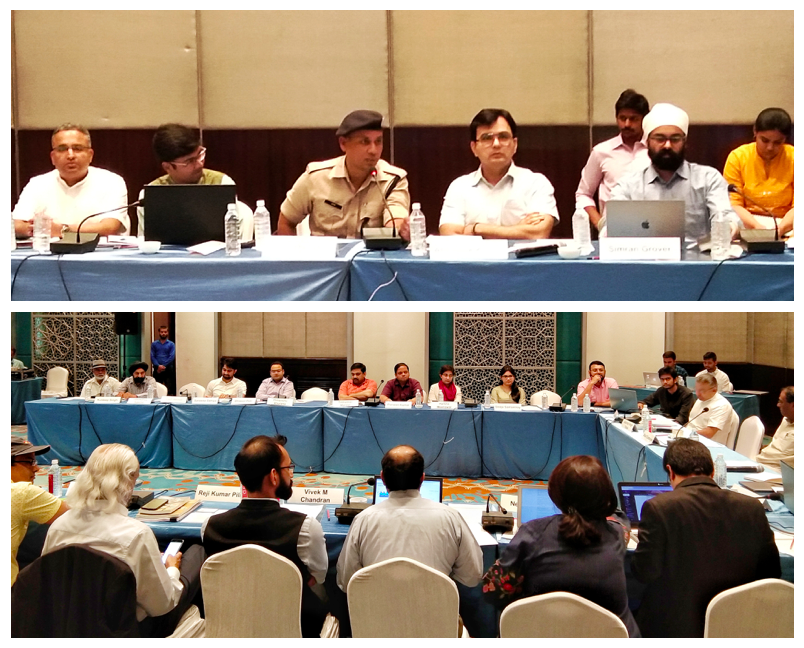
A dialogue on ‘Low Carbon Mobility Planning for Jaipur City’ was facilitated by CUTS International along with CEEP and WRI India. The session explored the needs and opportunities for low carbon mobility planning while highlighting the role of key stakeholders. It provided a structured platform to address concerns, map resources, and identify segments for mobility transformation in the city.
As urban centers are mushrooming, a host of challenges are arising threatening social security and ecological balance. Air quality and connectivity are at the forefront of these challenges, and these parameters have a strong influence on livability standards within a city.
India envisages hosting 25% of overall vehicle fleet on road in 2030, as electric. Electric Mobility offers a unique opportunity to build next generation, sustainable and clean mobility ecosystem within a city. While technology disruption shall continue to play a key role in the transformation of the mobility sector and electric vehicle integration, realising its true potential mandates careful planning and foresight. This is especially true considering linkages of electric mobility to infrastructure, real estate, consumer behavior, power regulations and finance, etc.
In a bid to address concerns of key stakeholders, identifying key segment for mobility transformation and map resources, CUTS International along with Centre for Energy, Environment and People (formerly known as Bask Research Foundation) and World Resources Institute (WRI) facilitated a dialogue on ‘Low Carbon Mobility Planning for Jaipur City’. The session discussed the needs and opportunities for low carbon mobility planning. It also delved into role of various stakeholders and gave a structure for dialogue and inputs from various stakeholders.
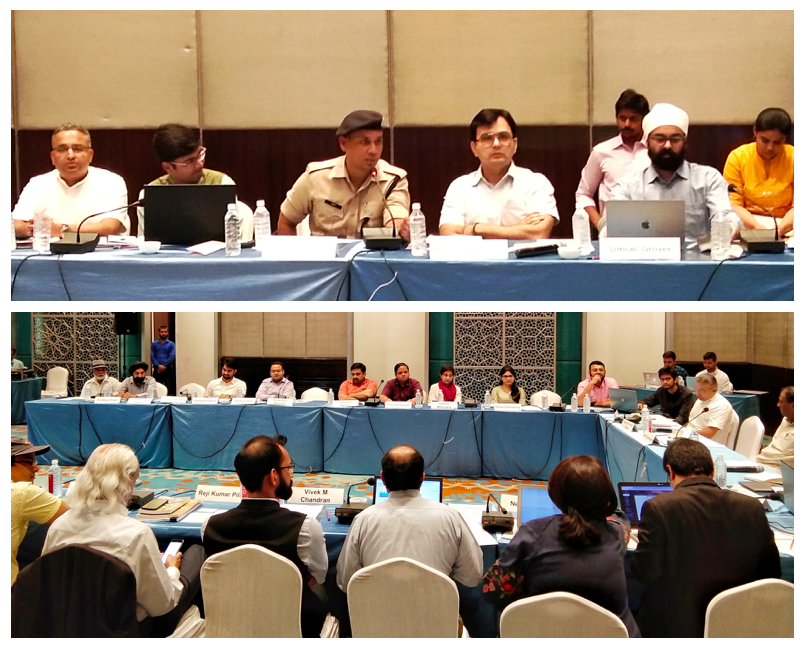
A dialogue on ‘Low Carbon Mobility Planning for Jaipur City’ was facilitated by CUTS International along with CEEP and WRI India. The session explored the needs and opportunities for low carbon mobility planning while highlighting the role of key stakeholders. It provided a structured platform to address concerns, map resources, and identify segments for mobility transformation in the city.
As urban centers are mushrooming, a host of challenges are arising threatening social security and ecological balance. Air quality and connectivity are at the forefront of these challenges, and these parameters have a strong influence on livability standards within a city.
India envisages hosting 25% of overall vehicle fleet on road in 2030, as electric. Electric Mobility offers a unique opportunity to build next generation, sustainable and clean mobility ecosystem within a city. While technology disruption shall continue to play a key role in the transformation of the mobility sector and electric vehicle integration, realising its true potential mandates careful planning and foresight. This is especially true considering linkages of electric mobility to infrastructure, real estate, consumer behavior, power regulations and finance, etc.
In a bid to address concerns of key stakeholders, identifying key segment for mobility transformation and map resources, CUTS International along with Centre for Energy, Environment and People (formerly known as Bask Research Foundation) and World Resources Institute (WRI) facilitated a dialogue on ‘Low Carbon Mobility Planning for Jaipur City’. The session discussed the needs and opportunities for low carbon mobility planning. It also delved into role of various stakeholders and gave a structure for dialogue and inputs from various stakeholders.
Please ensure all required fields (*) are filled out accurately.